
Stove Maintenance Guide: Extend Your Stove’s Life
Practical maintenance routines for gas, electric, and glass cooktop stoves in Colorado Springs. Prevent breakdowns, improve performance, and add years to your appliance — with altitude-specific tips you won’t find elsewhere.
Schedule Maintenance Service ›
⭐⭐⭐⭐⭐ 100+ Reviews | 100% Satisfied Clients | Licensed & Certified | Serving Since 2020
Why Stove Maintenance Matters More at Altitude
Regular maintenance extends the life of any stove by 3 to 5 years and prevents most emergency repair situations. In Colorado Springs, maintenance is even more critical because altitude puts additional stress on gas stove components. Igniters cycle more frequently, burner orifices clog faster due to altered combustion byproducts, and gas valve components work harder to regulate fuel flow at reduced atmospheric pressure.
This guide provides maintenance routines you can perform yourself — broken down by stove type and frequency — plus guidance on when professional maintenance is needed. Following these routines can reduce your lifetime stove repair costs by 40 to 60% and ensure your stove performs consistently at Colorado Springs’ elevation.
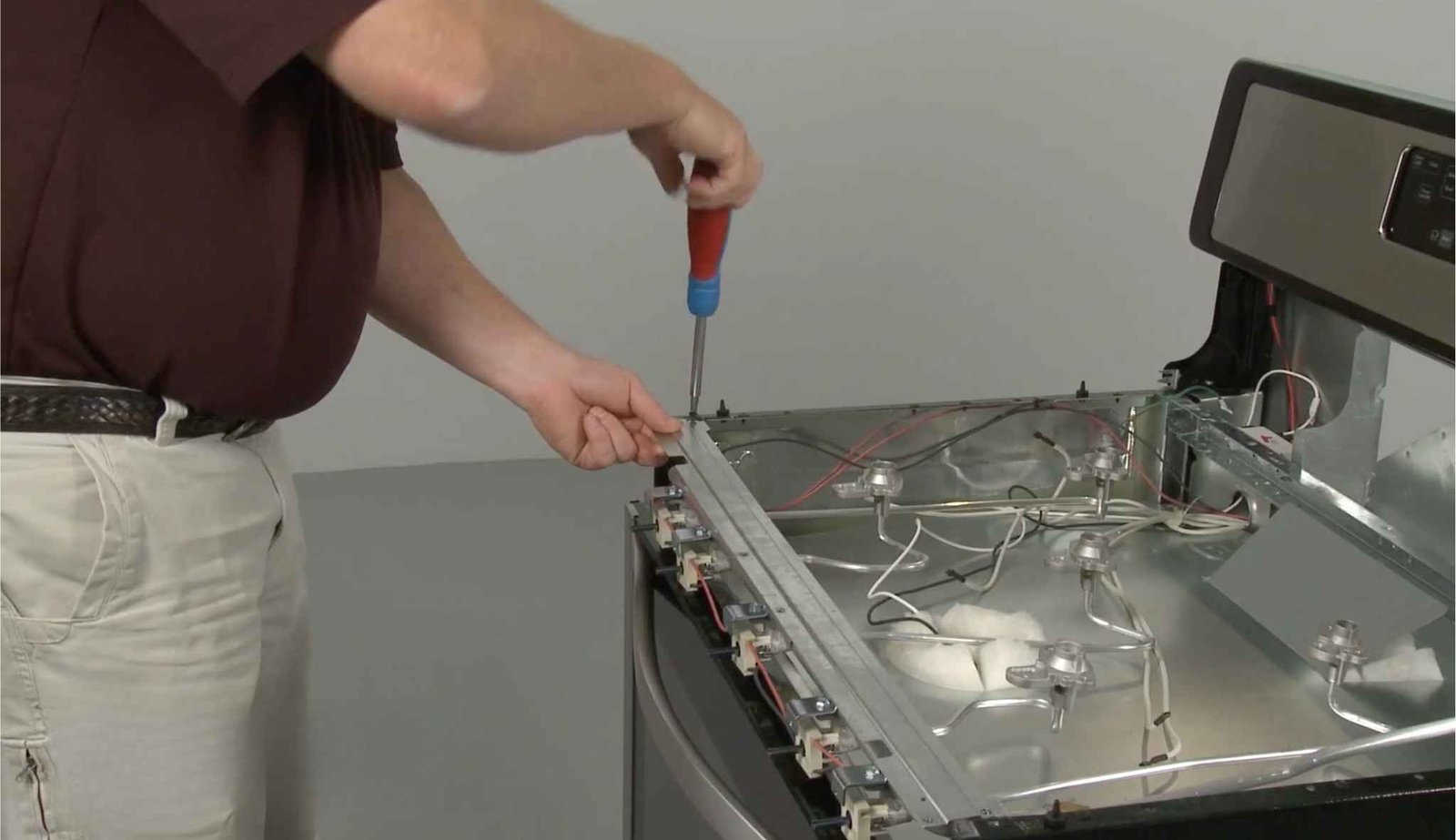
How Do I Maintain a Gas Stove?
Weekly tasks: Wipe down burner grates and drip pans with warm soapy water after they cool completely. Remove and clean burner caps (the removable caps that sit on top of each burner) — food debris under the caps blocks ignition and disrupts flame patterns. Wipe the cooktop surface to prevent buildup from baking onto the surface during future cooking sessions.
Monthly tasks: Remove burner caps and inspect the burner ports — the small holes around the burner perimeter where gas exits. Clear any blocked ports using a straight pin or toothpick (never a wooden toothpick that could break and lodge inside). Inspect igniters for discoloration or visible cracks — a white ceramic igniter that has turned brown or gray is approaching end-of-life. Check that all burner flames are consistent: even blue flames with a well-defined inner cone indicate proper operation; yellow flames, uneven patterns, or flames that lift off the burner head indicate a calibration or maintenance issue.
Quarterly tasks: Pull the stove away from the wall (carefully, without stressing the gas line) and vacuum behind and beneath it. Accumulated grease and food particles under the stove are a fire hazard and can attract pests. Inspect the gas line flex connector for signs of corrosion, kinking, or wear. Clean the oven interior with a non-toxic oven cleaner — do not use the self-clean cycle at altitude, as the extended high-heat cycle at 6,000+ feet accelerates component wear.
Annual tasks: Schedule a professional inspection. A technician should verify gas pressure at the appliance connection, test combustion efficiency with an analyzer, check igniter current draw (weak igniters can be replaced before they fail completely), inspect the oven thermostat calibration, and verify altitude calibration has not drifted. This annual checkup costs approximately market rate (quoted before work begins) and prevents most emergency repair situations.
How Do I Maintain an Electric Coil Stove?
Weekly: Wipe down drip pans and the cooktop surface. Lift the cooktop (most coil-top stoves have a hinged top) and wipe the area beneath the elements where food and grease accumulate.
Monthly: Remove coil elements by pulling them straight out of their receptacles. Inspect the element terminals — the male prongs that plug into the receptacle — for discoloration, pitting, or carbon buildup. Clean the terminals with fine steel wool if they are discolored. Inspect the receptacles for signs of arcing (black marks, melted plastic, or burning smell) — a damaged receptacle needs professional replacement before it causes a fire.
Quarterly: Test each element on every heat setting. An element that only works on high or takes excessively long to heat indicates a failing infinite switch. Identifying this early allows scheduled repair rather than an emergency call when the burner stops working entirely.
How Do I Maintain a Glass Cooktop Stove?
After every use: Clean spills and boilovers immediately after the surface cools. Sugary spills — jam, syrup, candy, tomato sauce — can permanently pit the glass surface if allowed to bake on. Use a glass cooktop cleaner (Cerama Bryte or equivalent) rather than general-purpose cleaners, which can leave residue that bakes into a haze.
Weekly: Apply glass cooktop cleaner and buff with a microfiber cloth to maintain the surface condition and prevent buildup. Inspect the surface for any cracks, chips, or scratches — minor scratches are cosmetic, but cracks are safety hazards that require immediate attention.
Monthly: Use a razor blade scraper (designed for glass cooktops) to remove any baked-on residue that regular cleaning has not removed. Hold the blade at a 30-degree angle to the surface and scrape gently in one direction. Never use the blade on a dry surface — apply cooktop cleaner first as a lubricant.
Important don’ts for glass cooktops: Do not slide heavy cookware across the surface — lift and place. Do not use cast iron with rough bottoms that can scratch the glass. Do not use the cooktop as a cutting board or food prep surface. Do not place hot lids face-down on the cooktop (the seal creates a vacuum that can crack the glass when the lid cools).
How Do I Maintain an Oven?
Monthly: Clean the oven interior with a paste of baking soda and water (let it sit overnight, then wipe clean) or a commercial non-toxic oven cleaner. At altitude, we recommend manual cleaning over the self-clean function. The self-clean cycle heats the oven to approximately 900 degrees and at 6,000+ feet, the extended duration required for complete cleaning puts excessive stress on door lock mechanisms, door gaskets, temperature sensors, and control boards. We see significantly more self-clean-related failures in Colorado Springs than the national average.
Quarterly: Inspect the oven door gasket — the rubber or fiberglass seal around the oven door edge. A damaged or compressed gasket allows heat to escape, reducing efficiency and causing uneven cooking. Press on the gasket; it should feel springy and compress, then return to its original shape. A gasket that feels hard, crumbly, or does not spring back needs replacement (market rate (quoted before work begins) part, professional installation recommended).
Semi-annually: Test oven temperature accuracy with an oven thermometer. Place the thermometer in the center of the oven, set the oven to 350 degrees, and check the reading after 20 minutes of preheating. A variance of 25 degrees or more indicates calibration drift — schedule a professional recalibration.
Altitude-Specific Maintenance Tips
Maintenance steps unique to Colorado Springs that national guides miss.
Should I Use the Self-Clean Function on My Oven?
We advise against using the self-clean function on ovens operating above 5,500 feet. Here is why: the self-clean cycle heats the oven to approximately 900 degrees Fahrenheit to incinerate food residue. At sea level, this cycle runs 2 to 3 hours. At altitude, reduced oxygen means the incineration process takes longer — 3 to 4+ hours at 6,000 feet. This extended exposure to extreme heat damages door lock motors (the most common self-clean failure — market rate (quoted before work begins) to repair), oven door gaskets (which degrade faster at extreme temperatures), control boards (which can suffer component failure from prolonged heat), and thermal fuses (which blow as a safety measure, disabling the oven until replaced). The cost of a single self-clean-related repair (market rate (quoted before work begins)) far exceeds the cost of manual oven cleaning supplies used over several years. Clean your oven manually — it takes 30 minutes of effort and protects hundreds of dollars in components.
How Do I Protect My Stove from Power Surges?
Modern stoves with electronic controls, touchpads, and digital displays are vulnerable to power surges. Colorado Springs experiences frequent electrical storms from May through September, and some older neighborhoods have electrical infrastructure more prone to voltage fluctuations. A single power surge can destroy a control board (market rate (quoted before work begins) to replace). Protection options include a dedicated surge protector outlet strip for electric ranges (plug the range into a surge protector rated for the appliance’s amperage — not a standard power strip), a whole-house surge protector installed at the electrical panel (protects all appliances and costs market rate (quoted before work begins) installed), and unplugging the range during severe thunderstorms when possible. Gas stoves with electronic ignition are equally vulnerable — they use 120V power for the spark module and control systems.
How Often Should I Have My Stove Professionally Serviced?
We recommend annual professional maintenance for gas stoves and biennial (every 2 years) for electric stoves. Gas stoves benefit from more frequent professional attention because gas combustion components (igniters, gas valves, thermocouples, burner assemblies) wear at predictable rates that a trained eye can detect before failure. Catching a weak igniter drawing 2.8 amps (minimum spec is 3.0) during a maintenance visit allows planned replacement for market rate versus an emergency call when it fails completely at 2.5 amps — potentially in the middle of Thanksgiving cooking.
What Does Professional Stove Maintenance Include?
A professional stove maintenance visit from Stove Works includes full combustion analysis on all gas burners and oven, igniter current draw testing on all ignition components, gas pressure verification at the appliance connection, oven temperature calibration check with a certified thermometer, gas leak detection on all connections and valves, burner port cleaning and air shutter inspection, door gasket inspection, electrical connection inspection for loose or burned terminals, altitude calibration verification, and a written condition report noting any components approaching end-of-life. This comprehensive service takes approximately 45 to 60 minutes and costs market rate (quoted before work begins). It provides a clear picture of your stove’s health and allows you to plan any upcoming repairs rather than being surprised by breakdowns.
What Colorado Springs Homeowners Say About Maintenance
“Annual maintenance caught a weak igniter before it failed. Replaced it during the maintenance visit for market rate instead of an emergency call. Smart investment — one annual checkup has prevented two breakdowns over three years.”
— Robert & Lynn P., Broadmoor (80906)
“Stopped using the self-clean function after reading about altitude issues. Manual cleaning takes 30 minutes and I haven’t had a single oven repair in four years. My neighbor used self-clean and needed a market rate door lock replacement.”
— Diana K., Monument (80132)
Schedule preventive maintenance: (719) 467-3100 — Annual gas stove service: market rate (quoted before work begins).
More Stove Repair Resources
Further reading: Thanksgiving stove prep at altitude | Signs your stove igniter is failing