
Stove Repair vs Replace: When to Fix and When to Buy New
An honest, data-backed guide from technicians who would rather give you the right answer than sell you a repair. Repair costs, replacement costs, lifespan data, and the 50% rule explained for Colorado Springs homeowners.
⭐⭐⭐⭐⭐ 100+ Reviews | 100% Satisfied Clients | Licensed & Certified | Serving Since 2020
The Repair vs. Replace Decision: What Actually Matters
Every stove repair company has a financial incentive to recommend repair. Every appliance retailer has a financial incentive to recommend replacement. That makes this one of the hardest home decisions to get unbiased guidance on. At Stove Works, we have told hundreds of Colorado Springs homeowners that their stove is not worth repairing — because sometimes it is not. Our reputation depends on giving the right answer, not the profitable one.
This guide provides the framework we use internally to advise customers. It is based on actual repair costs from our service records, current replacement prices for comparable appliances, average appliance lifespans adjusted for Colorado Springs’ altitude conditions, and the real-world factors that influence whether repair or replacement delivers better value over 5 years.
The decision comes down to four variables: the age of your stove, the cost of the repair, the price of a comparable replacement, and whether the stove has additional issues beyond the immediate failure.
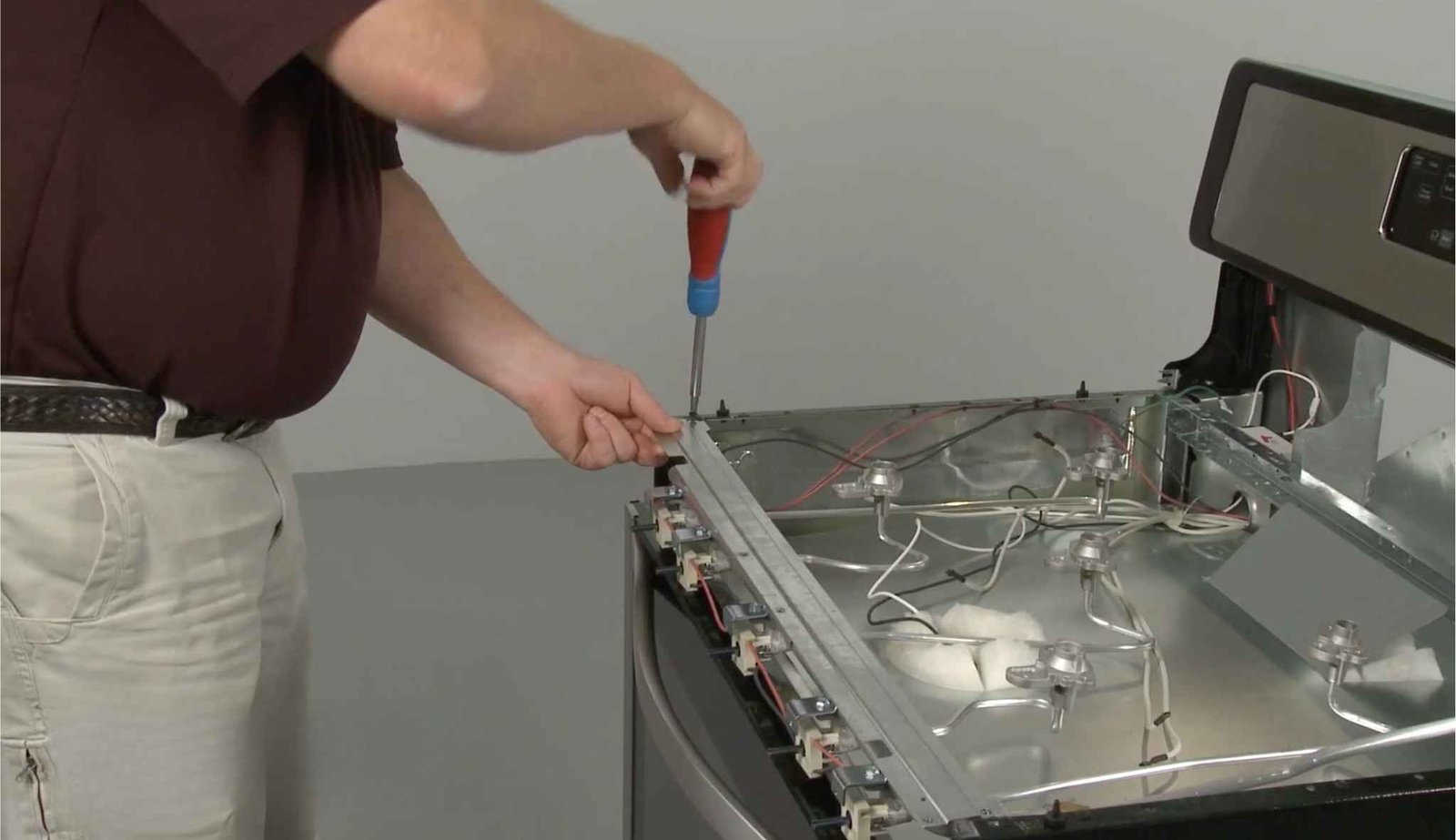
What Is the 50% Rule for Stove Repair?
The 50% rule is the most widely used guideline in the appliance repair industry: if the repair cost exceeds 50% of the price of a comparable new appliance, replacement is generally the better financial decision. This rule accounts for the fact that an older appliance that needs an expensive repair is likely to need additional repairs in the coming years. Here is how the 50% rule works in practice for common Colorado Springs stove types.
A standard gas range costs market rate to $1,200 to replace. Using the 50% rule, repairs over market rate (quoted before work begins) (depending on the replacement tier) favor buying new. A standard electric range costs market rate (quoted before work begins) to replace, making the repair threshold market rate (quoted before work begins). A glass cooktop range runs market rate to $1,400, with a threshold of market rate (quoted before work begins). Premium ranges from Wolf, Viking, or Thermador cost $3,000 to market rate,000+ to replace, which means the 50% threshold is $1,500 to $6,000+ — making even expensive repairs almost always more cost-effective than replacement for premium brands.
The 50% rule is a starting point, not an absolute. Several factors can shift the decision in either direction, which we cover below.
How Long Do Stoves Last in Colorado Springs?
National average lifespans published by appliance industry groups assume sea-level conditions. Colorado Springs’ altitude and climate shorten some of these figures. Based on our service data, here are realistic lifespan expectations for stoves in the Colorado Springs area.
Gas ranges typically last 13 to 18 years at altitude versus the national average of 15 to 20 years. The shortened lifespan is driven by faster igniter wear and gas valve degradation from altitude-related combustion stress. Electric coil ranges last 13 to 16 years — comparable to the national average since altitude does not significantly affect electric heating elements. Glass cooktop ranges last 10 to 15 years, with the glass surface itself often being the limiting factor due to thermal stress cracking. Induction cooktops last 10 to 14 years, primarily limited by control board and inverter component lifespan. Dual-fuel ranges last 14 to 18 years, combining gas and electric lifespan considerations. Premium ranges from brands like Wolf, Viking, and Thermador can last 20 to 30+ years with proper maintenance and periodic component replacement — their heavier construction and higher-quality materials justify repair at almost any single-component failure point.
When Should You Definitely Repair Your Stove?
Repair is the clear winner in the following scenarios. The stove is less than 8 years old and the repair involves a single component failure such as an igniter, element, switch, or thermostat. These are normal wear items with predictable lifespans and affordable replacement costs (market rate (quoted before work begins)). A repaired 5-year-old range has 8 to 13 years of remaining life — far more value than scrapping it.
The stove is a premium brand — Wolf, Viking, Thermador, Sub-Zero, Miele, BlueStar, or La Cornue. The replacement cost of these ranges ($3,000 to $15,000+) makes virtually any single repair economically justified. A market rate control board replacement on a Wolf range is trivial compared to a $7,000 replacement unit.
The stove is vintage and desirable — O’Keefe & Merritt, Wedgewood, Chambers, or other collectible brands. These ranges have value beyond their cooking function and can be repaired and rebuilt indefinitely. The replacement cost is not just the price of a new appliance — it is the loss of an irreplaceable piece.
The stove has never been altitude-calibrated. A stove that “does not work right” because it was never adjusted for 6,000+ feet is not failing — it is misconfigured. A market rate (quoted before work begins) altitude calibration solves the problem entirely. We see this frequently in Colorado Springs: homeowners considering a a higher market rate replacement when a market rate calibration would have fixed everything.
When Should You Definitely Replace Your Stove?
Replacement is the clear winner in these scenarios. The stove is 15+ years old and needs a repair costing more than market rate. At this age, additional failures are statistically likely within 1 to 3 years. Spending a higher market rate on a stove that may need another market rate repair next year is poor economics.
Multiple systems are failing simultaneously. If the oven igniter is dead, two burners are not lighting, and the control panel is malfunctioning, the total repair cost will likely approach or exceed the 50% threshold. Cascading failures indicate system-wide age-related degradation.
The stove has a safety defect that cannot be fully resolved by repair. A cracked gas manifold, irreparable gas valve leak, or structural damage to the gas-carrying components are situations where replacement is the only safe option.
The stove has been recalled and the recall remedy is a replacement unit or refund. Check your model against current recall databases — particularly Samsung, LG, and Frigidaire models from 2016 to 2021, which had several significant recalls.
Replacement parts are no longer manufactured or available for the model. Some stove brands discontinue parts within 8 to 10 years of model production end. If the specific part needed is unavailable even from aftermarket sources, repair is not possible.
Real Repair vs. Replace Decisions from Colorado Springs
Three real cases where we helped homeowners make the right call.
Case Study 1: Repair Was the Right Call
Situation: A 6-year-old KitchenAid dual-fuel range (original price $2,800) with a dead convection fan motor and a burned-out broil element. Homeowner was quoted $1,200 for a new comparable range by a retailer who told her the stove was “not worth fixing.”
Our assessment: Two separate component failures on an appliance with 8 to 12 years of remaining life. Repair cost: market rate for both parts plus labor. The 50% threshold on a $2,800 replacement is $1,400 — the market rate repair was nowhere near that line. The stove’s other systems (gas burners, oven igniter, control board, thermostat) all tested within spec.
Outcome: Repaired for market rate. Stove continues to function perfectly 14 months later with no additional issues. The homeowner saved them significantly+ compared to replacement (new range cost minus trade-in/disposal) and avoided the hassle of delivery, installation, and gas connection for a new unit.
Case Study 2: Replacement Was the Right Call
Situation: A 17-year-old Frigidaire gas range with a dead oven igniter, a gas valve that was leaking internally (gas smell when oven was off), and two surface burners with corroded valve stems. The homeowner wanted to repair because the stove “still kind of worked.”
Our assessment: Three simultaneous failures on a 17-year-old appliance. Estimated repair cost: market rate for all three issues. A comparable new Frigidaire gas range costs market rate. The repair was 59% of replacement cost, exceeding the 50% threshold. More importantly, at 17 years old with three concurrent failures, additional problems were statistically likely within 12 to 18 months. The gas valve leak also presented an ongoing safety concern even after repair, as the valve body itself showed corrosion that could produce future leaks at other seal points.
Outcome: We recommended replacement and the homeowner purchased a new range. We waived the diagnostic fee because we did not perform a repair. The homeowner appreciated the honest assessment and hired us to altitude-calibrate the new range after delivery (market rate) — ensuring their new stove performed correctly from day one.
Case Study 3: Altitude Calibration Saved a “Broken” Stove
Situation: A homeowner in Monument (elevation 6,960 feet) had a 2-year-old GE gas range that “never worked right.” Cookies burned on the bottom, the oven undercooked everything by 15 to 20 minutes, and burner flames were yellow and sooty. She had already purchased a new Samsung range and scheduled delivery, assuming the GE was defective.
Our assessment: The stove was not defective. It was factory-calibrated for sea level and had never been altitude-adjusted — a common situation when big-box retailers deliver and install at altitude without performing conversion. Every symptom matched altitude miscalibration perfectly. The stove was 2 years old and in excellent condition.
Outcome: We performed a full altitude calibration for market rate. The stove immediately produced blue flames, accurate oven temperature, and proper cooking results. The homeowner canceled the Samsung delivery and saved roughly market rate. She later referred three neighbors to us for the same altitude calibration service.
What Colorado Springs Homeowners Say About Our Honest Assessments
“They told me my 17-year-old Frigidaire wasn’t worth repairing. Any other company would have taken my money and fixed it anyway. That honesty earned my trust — I hired them to set up my new range and I’ll call them for every future repair.”
— Nancy W., Security-Widefield (80911)
“I was about to spend market rate on a new stove because I thought mine was broken. Stove Works diagnosed an altitude calibration issue and fixed it for market rate. My ‘broken’ stove works perfectly now. I almost made an expensive mistake.”
— Jennifer K., Monument (80132)
“Big-box store told me my KitchenAid was done and tried to sell me a new range. Stove Works fixed it for market rate and it’s been running great for over a year. Always get a second opinion from a repair company before replacing.”
— Laura M., Briargate (80920)
Does a New Stove Need Altitude Calibration in Colorado Springs?
Yes — almost always. The vast majority of gas stoves sold in the United States ship with factory sea-level calibration. When a big-box retailer or online seller delivers a gas range to a Colorado Springs home, the delivery team typically connects the gas line and verifies ignition but does not perform altitude conversion. The stove will function, but it will not function correctly. Burners will produce yellow flames, the oven will undershoot temperature, and combustion will be incomplete. We recommend scheduling altitude calibration for any new gas stove within the first week of installation. The cost (market rate (quoted before work begins)) is a fraction of the appliance price and ensures you get the performance you paid for.
What Hidden Costs Come with Replacing a Stove?
The sticker price of a new range is not the full cost of replacement. Additional expenses frequently include delivery and installation fees (market rate (quoted before work begins)), gas line connection or modification if the new range has a different connection type (market rate (quoted before work begins)), electrical work if switching from gas to electric or vice versa (market rate (quoted before work begins)+), removal and disposal of the old appliance (market rate (quoted before work begins)), altitude calibration for the new gas range (market rate (quoted before work begins)), and counter or cabinet modifications if the new range has different dimensions (market rate (quoted before work begins)+). These add-ons can increase the true replacement cost by market rate to $1,000+ beyond the purchase price. Factor them in when comparing repair vs. replacement economics.
Our Repair-or-Replace Assessment Process
When we diagnose a stove issue, we automatically evaluate repair vs. replacement using the framework in this guide. If repair is clearly the right choice, we quote and proceed. If replacement is the better option, we tell you directly, explain why, and waive the diagnostic fee. If it is a borderline case, we present both options with full cost comparisons and let you decide. We never pressure toward repair when replacement makes more sense — our business depends on trust, not on selling unnecessary repairs.
Get an honest assessment: (719) 467-3100 — We’ll tell you the truth.