
Gas Stove Burner Repair Colorado Springs
Uneven flames, weak burners, or yellow fire? Our altitude-trained technicians repair gas stove burners across Colorado Springs — restoring full heat output safely.
⭐⭐⭐⭐⭐ 100+ Reviews | 100% Satisfied Clients | Licensed & Certified | Serving Since 2020
Why Is My Gas Stove Burner Not Working Properly?
Gas stove burner problems are among the most frequent appliance repair calls in Colorado Springs. Whether your burner produces a weak flame, burns yellow instead of blue, heats unevenly, or won’t light at all, the issue typically traces back to a clogged burner port, a misaligned burner cap, a faulty gas valve, or an igniter problem.
At Colorado Springs elevation of 6,035 feet, gas burners face a unique challenge: the thinner air delivers approximately 20% less oxygen per cubic foot than at sea level. This reduced oxygen density means burner orifices — the small openings that meter gas flow — must be specifically sized for high-altitude operation. A burner running with sea-level orifices at our elevation will produce yellow, sooty flames, reduced heat output, and increased carbon monoxide risk.
Our technicians understand these altitude-specific factors and carry the proper high-altitude orifice kits and calibration tools to restore your gas stove burners to peak performance.
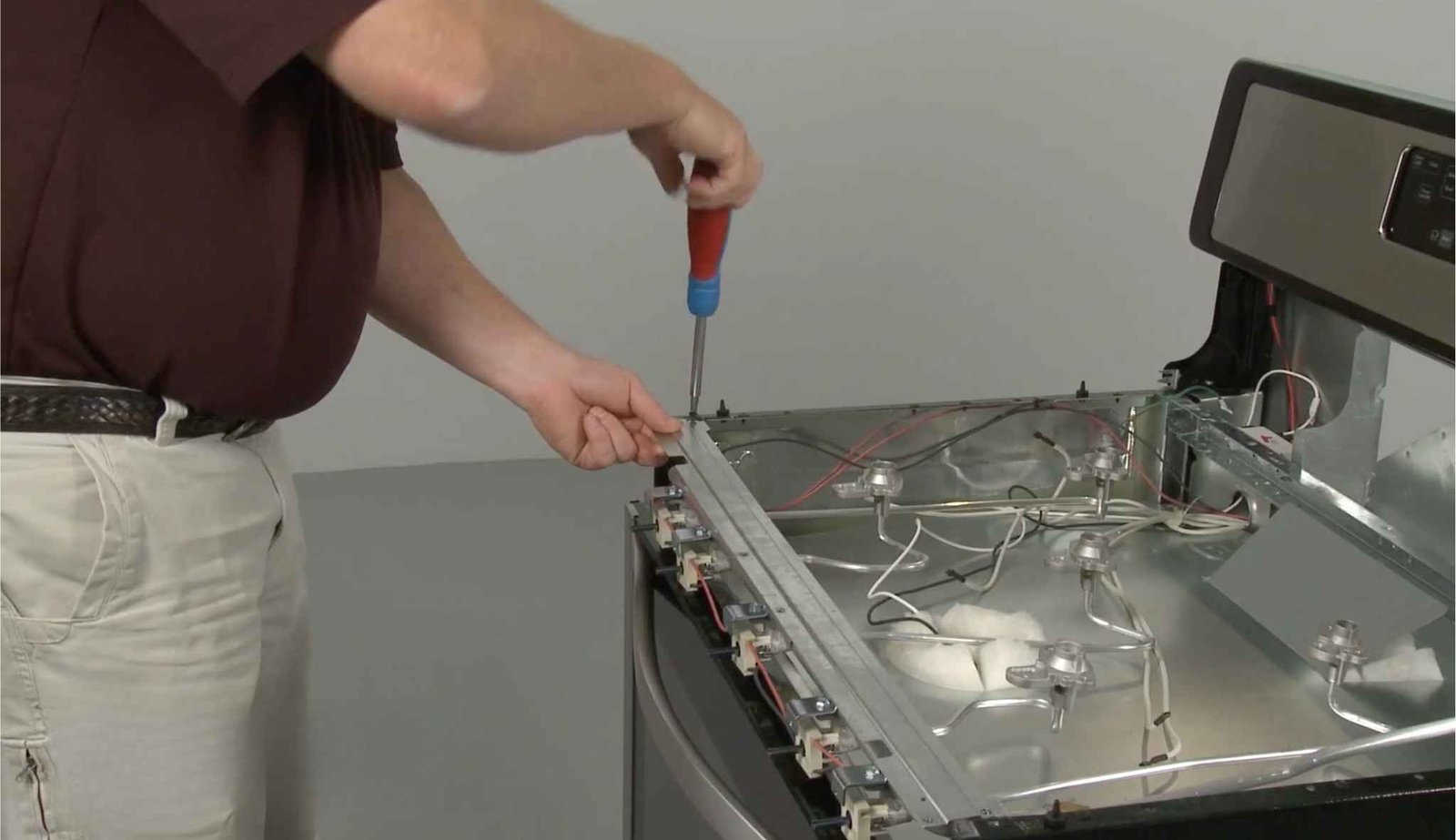
What Are Common Gas Stove Burner Problems?
Here are the burner issues Colorado Springs homeowners encounter most frequently:
- Yellow or orange flame — Indicates incomplete combustion from clogged ports, wrong orifice size, or insufficient air intake; produces carbon monoxide and soot
- Uneven flame pattern — Some ports fire while others don’t, caused by food debris or mineral deposits blocking individual burner ports
- Weak or low flame — Reduced gas flow from a partially clogged orifice, failing gas valve, or low supply pressure
- Burner won’t light — Igniter failure, clogged burner ports preventing gas from reaching the spark, or a stuck gas valve
- Flame lifts off burner — The flame floats above the burner surface, a sign of excessive gas pressure or incorrect orifice sizing for altitude
- Popping or sputtering flame — Moisture in the burner assembly, typically after a spill or boilover that hasn’t dried completely
Altitude-Calibrated Gas Burner Repair
Every burner repair includes orifice verification and flame adjustment for 6,000+ foot elevation.
How Much Does Gas Stove Burner Repair Cost in Colorado Springs?
Gas stove burner repair in Colorado Springs typically ranges from market rate (quoted before work begins), depending on the nature of the problem:
- Burner cleaning and port clearing — market rate (quoted before work begins), resolves most clogging and uneven flame issues
- Orifice replacement (altitude conversion) — market rate (quoted before work begins), includes proper high-altitude orifice kit installation
- Gas valve repair or replacement — market rate (quoted before work begins), for valves that won’t open fully or stick in position
- Burner assembly replacement — market rate (quoted before work begins), when the burner head or venturi tube is cracked or warped
- Igniter replacement per burner — market rate (quoted before work begins), often combined with burner cleaning for best results
All repairs include upfront pricing — you approve the cost before we begin any work.
“Two burners on our gas range were producing tall yellow flames and leaving soot on our pans. The technician cleaned the ports, replaced the orifices with altitude-rated ones, and now every burner runs a clean blue flame. Huge difference.”
— Marcus W., Cimarron Hills (80915)
How Does Altitude Affect Gas Stove Burners?
Colorado Springs altitude has a direct, measurable impact on gas burner performance. At 6,035 feet, atmospheric pressure drops to approximately 24.4 inches of mercury compared to 29.9 at sea level. This pressure difference reduces the amount of oxygen available for combustion by roughly 20%.
For gas stove burners, this means the air-fuel mixture becomes richer (more gas relative to air) unless the orifice is downsized. Manufacturers produce high-altitude orifice kits that restrict gas flow to match the reduced oxygen, maintaining the ideal 10:1 air-to-fuel ratio needed for clean blue combustion.
Many stoves sold in Colorado Springs are already converted at the factory or by the installer. However, we frequently encounter ranges — especially those purchased online or moved from lower elevations — still running sea-level orifices. Our technicians verify orifice sizing on every gas burner repair and convert when needed.
Our Gas Stove Burner Repair Process
- Flame assessment — We evaluate flame color, height, pattern, and stability on every burner to identify issues
- Burner disassembly — We remove burner caps, heads, and venturi tubes for thorough cleaning and inspection
- Port clearing — Using calibrated cleaning tools, we clear each burner port of grease, food debris, and mineral buildup
- Orifice inspection — We verify orifice sizing matches altitude requirements and replace with proper high-altitude jets when needed
- Gas pressure testing — We measure manifold pressure and individual burner pressure to confirm proper gas delivery
- Reassembly and flame test — Every burner is reassembled, lit, and verified for a consistent blue flame with proper cone height
“We moved our gas range from Denver and the burners never worked right here. Stove Works swapped the orifices for proper Colorado Springs altitude jets and it cooks like new. Should have called them months ago.”
— Linda R., Monument (80132)
Gas Stove Burner Repair: (719) 467-3100
Frequently Asked Questions About Gas Stove Burner Repair
Why is my gas burner flame yellow instead of blue?
A yellow flame means incomplete combustion — the burner is receiving too much gas relative to oxygen. At Colorado Springs altitude, this almost always indicates the orifice hasn’t been converted for high-altitude operation or the air shutter needs adjustment.
Can I clean gas stove burner ports myself?
You can clear surface debris from burner ports using a straight pin or needle. However, if cleaning doesn’t resolve uneven flames, the issue is likely deeper — in the orifice, gas valve, or venturi assembly — and requires professional diagnosis.
How often should gas stove burners be serviced?
We recommend professional burner inspection and cleaning annually, or whenever you notice changes in flame color, height, or pattern. Regular cleaning prevents major buildup that leads to costly repairs.