
High Altitude Stove Repair in Colorado Springs, CO
At 6,035 feet, stoves need altitude-specific calibration. Our technicians specialize in BTU adjustments, air-fuel mixture tuning, and pressure regulator service.
⭐⭐⭐⭐⭐ 100+ Reviews | 100% Satisfied Clients | Licensed & Certified | Serving Since 2020
High Altitude Stove Problems in Colorado Springs — Why Your Stove Acts Different at 6,035 Feet
Colorado Springs sits at 6,035 feet above sea level — higher than Denver. That elevation changes how every gas appliance in your kitchen operates. If you moved here from sea level, bought a stove that was never adjusted, or wonder why your burners run yellow and your oven bakes slow, this page explains exactly what’s happening and how to fix it.
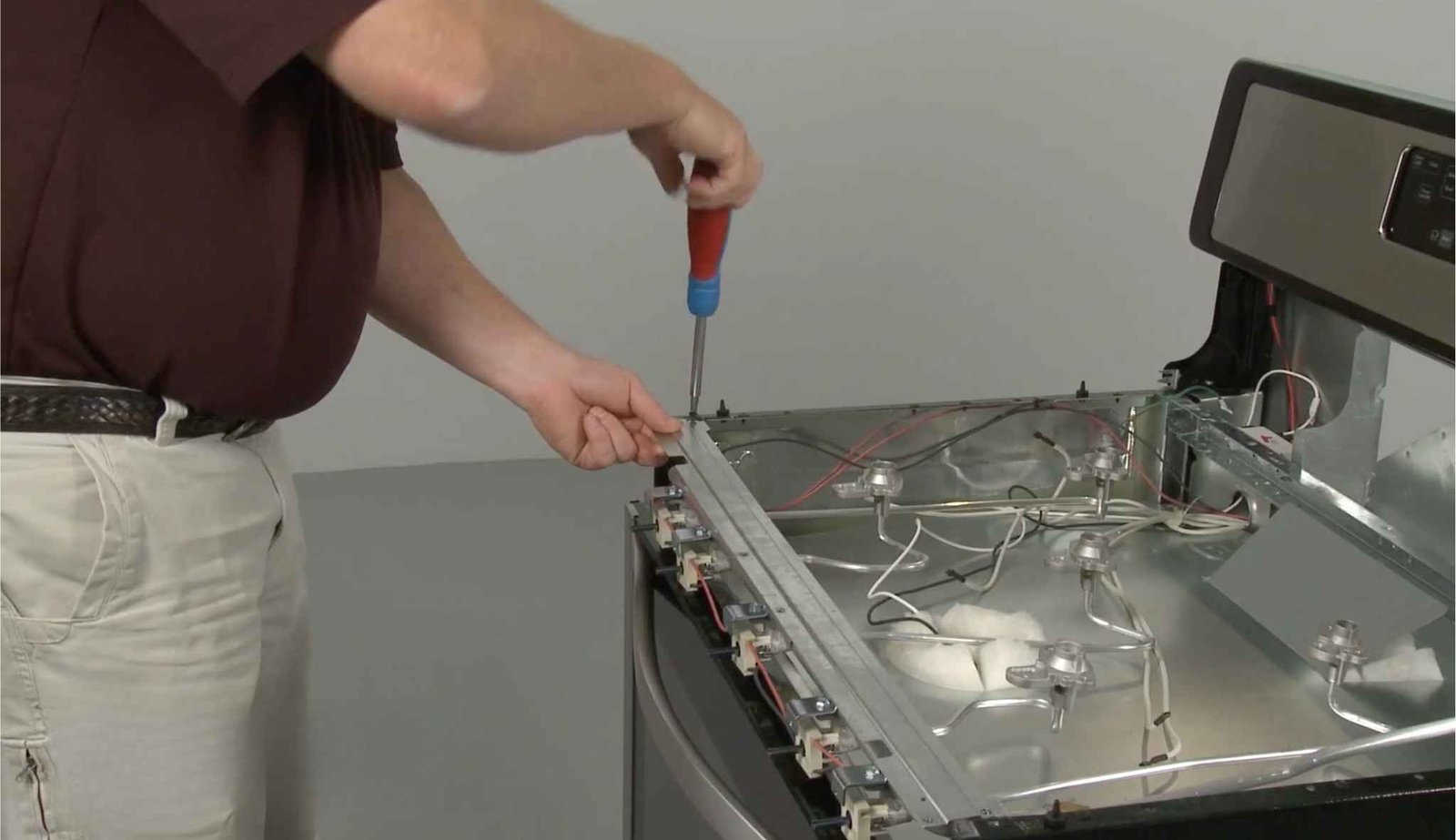
Why Does Altitude Affect Gas Stoves?
Gas stoves burn a mixture of natural gas and air. At 6,035 feet, the air is roughly 17% thinner — 17% less oxygen per cubic foot. A sea-level-calibrated stove runs rich: too much gas, not enough oxygen.
Yellow or orange flames — unburned carbon particles glowing in the flame.
Black soot on pots and pans — those particles depositing on cookware.
Reduced heat output — less complete combustion means less heat per cubic foot of gas.
Elevated carbon monoxide — incomplete combustion produces CO instead of CO2.
What Is a High-Altitude Stove Adjustment?
1. Orifice replacement. Each burner has an orifice — a brass fitting with a precisely sized hole that meters gas flow. High-altitude orifices have smaller holes to reduce gas flow. Most manufacturers include the kit in the box — installers often skip it.
2. Air shutter adjustment. Each burner has an air shutter that controls ambient air mixing. At altitude, we open these wider to maximize airflow.
The combination restores the proper combustion ratio: blue flames, no soot, full heat, lower CO.
Which Stoves Need Altitude Adjustment in Colorado Springs?
New stoves purchased locally: Big-box stores sell sea-level calibrated stoves. The kit is in the box but rarely installed.
Stoves from out of state: Military families at Fort Carson, Peterson SFB, and the Academy bring stoves from lower elevations.
Stoves never adjusted: We see 10+ year old stoves that have never been adjusted.
After gas conversion: LP to natural gas conversion requires both fuel-type AND altitude-correct orifices.
How Do I Know If My Stove Needs Altitude Adjustment?
Turn on a burner. Healthy: Primarily blue with small inner cone. Needs adjustment: Mostly yellow/orange, lazy, leaves soot on a white plate held above for 10 seconds.
For the oven: preheat to 350°F and check with an oven thermometer. If it reads 20°F+ below set temp after full preheat, altitude calibration is needed.
Does Altitude Affect Electric Stoves?
Electric elements produce the same heat regardless of altitude. But cooking is affected:
Water boils at 201°F instead of 212°F. Boiling foods take longer — more burner power won’t help.
Baking needs modifications: Reduce sugar 1-3 tbsp/cup, reduce leavening 25%, increase liquid 2-4 tbsp/cup, increase oven temp 15-25°F (CSU Extension guidelines).
Professional High Altitude Stove Problems Colorado Springs
Licensed technicians serving every Colorado Springs neighborhood. Same-day service available — call now.
Most Common Altitude Problems by Frequency
#1 — Yellow flames (65%): Orifice swap + air shutter adjustment. 45 minutes.
#2 — Oven won’t reach temp (20%): Orifice + thermostat calibration.
#3 — Pilot won’t stay lit (8%): Pilot orifice + thermocouple cleaning.
#4 — Gas smell during operation (5%): Rich combustion odor, test for leaks first.
#5 — Propane issues in outlying areas (2%): Woodland Park, Falcon, Black Forest — need altitude AND LP orifices.
Case Study: Military Family Moves from Virginia Beach to Fort Carson
PCS’d from sea level with a Samsung gas range. Yellow flames, cold oven, gas smell. Samsung said “not designed for high altitude” — wrong. Installed high-altitude orifice kit. Blue flames, accurate oven temp. Saved $1,500+ vs buying new.
Case Study: New Range from Home Depot Never Adjusted in Cordera
GE Profile gas range with soot on every pot within a week. GE warranty tech said “operating normally.” High-altitude kit was still in the unopened bag taped to the back. 50 minutes to install. No more soot.
Case Study: 12-Year-Old Stove Never Adjusted in Old North End
Called about a failed igniter. Technician found ALL burners running yellow with heavy carbon buildup — 12 years of rich combustion. Replaced igniter, deep-cleaned all assemblies, installed high-altitude orifices. Homeowner said it “works better than it ever has.”
Elevation Data for Area Communities
Monument: 6,962 ft | Palmer Lake: 7,237 ft | Woodland Park: 8,465 ft | Black Forest: 7,100 ft | Manitou Springs: 6,320 ft | Fountain: 5,545 ft | Fort Carson: 5,800 ft | Falcon/Peyton: 6,800–7,200 ft
All well above the 2,000-foot adjustment threshold.
Book a High-Altitude Stove Adjustment
Call (719) 467-3100 or schedule online. We check altitude calibration on every gas stove service call. Under an hour for most adjustments.
Colorado Springs: (719) 467-3100
More Stove Repair Services in Colorado Springs
Stove Repair Colorado Springs » » »