Induction Stove Repair Colorado Springs
Induction cooktop flashing errors, not detecting pans, or losing power? Our technicians specialize in the complex electronics behind induction cooking — right here in Colorado Springs.
⭐⭐⭐⭐⭐ 100+ Reviews | 100% Satisfied Clients | Licensed & Certified | Serving Since 2020
Why Is My Induction Stove Not Working?
Induction stoves use electromagnetic fields to heat cookware directly rather than heating a burner surface. This technology delivers faster heating and precise temperature control, but the sophisticated electronics behind it require specialized repair expertise that most general appliance technicians lack.
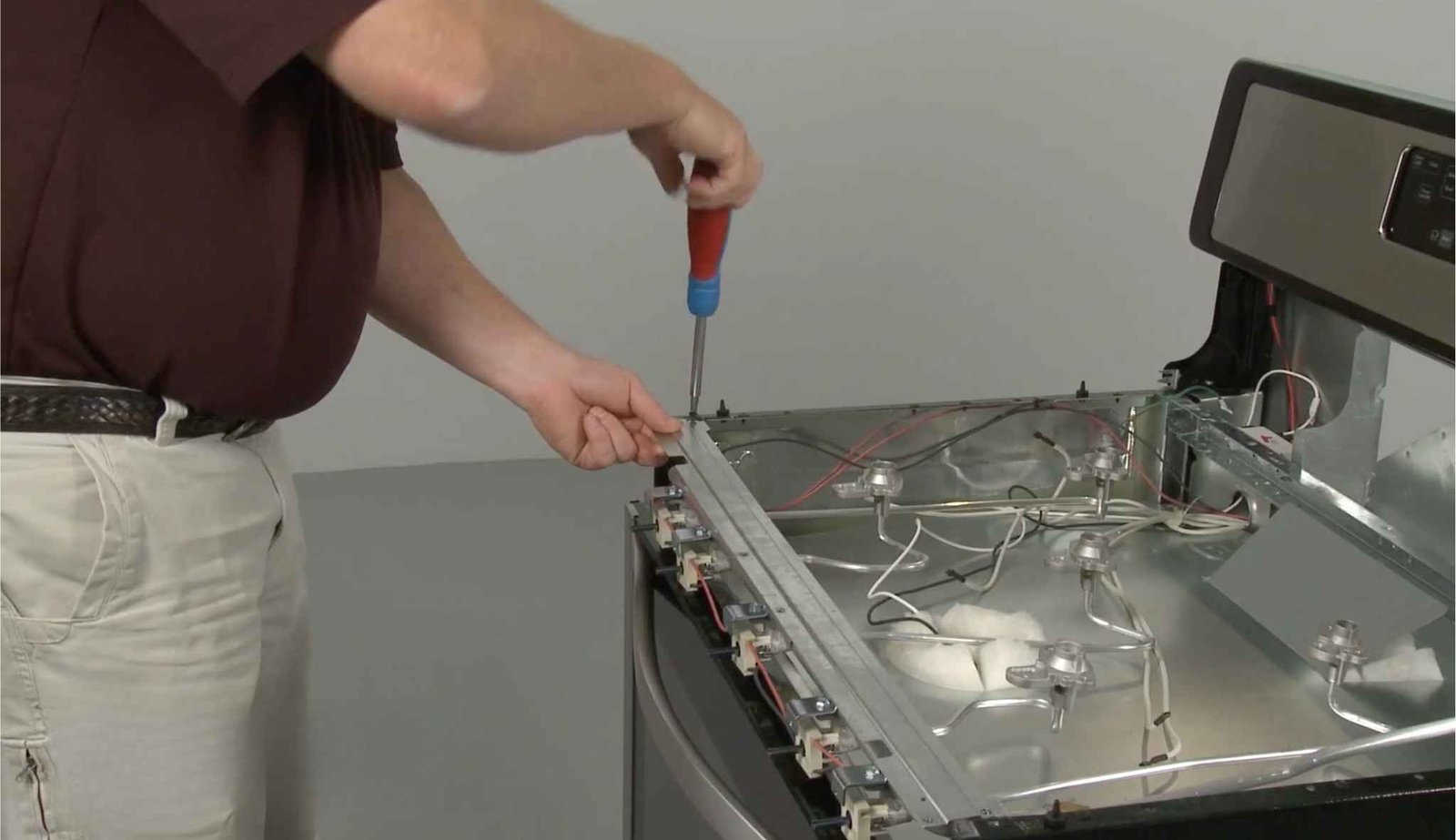
Common induction stove failures include zones that won’t detect cookware, error codes on the display, intermittent power loss during cooking, buzzing or humming noises, and complete appliance shutdown. These problems typically trace back to failed IGBT power transistors, blown capacitors on the control board, damaged induction coils, overheating protection circuit activation, or faulty touch panel interfaces.
Our technicians carry the electronic diagnostic equipment needed to test induction-specific components — including oscilloscopes for coil output testing and ESR meters for capacitor health — ensuring accurate diagnosis and targeted repair.
What Are Common Induction Stove Problems?
- Zone won’t detect cookware — The induction coil or pan detection sensor fails to recognize compatible pans; may be a coil failure, a cracked glass surface disrupting the sensor, or use of incompatible cookware
- Error codes flashing — Electronic fault codes indicating specific component failures; each manufacturer uses different code systems requiring brand-specific diagnostic knowledge
- Power cuts out mid-cooking — Overheating protection trips when the cooling fan fails or airflow is blocked, causing the unit to shut down to prevent damage
- Buzzing or humming sounds — Some operational noise is normal with induction, but loud buzzing indicates a loose coil, failing IGBT transistor, or lamination issue in the coil assembly
- Cracked glass surface — Impact or thermal stress cracks the glass ceramic panel; the entire panel must be replaced as induction surfaces cannot be patched
- Touch controls malfunction — Moisture, heat damage, or control board failure causes the touch panel to become unresponsive or erratic
- Tripping circuit breaker — Induction cooktops draw significant power (30–50 amps); a short in the coil or power board can trip the dedicated circuit breaker
Specialized Induction Electronics Repair
IGBT transistors, control boards, induction coils — component-level diagnosis for all major brands.
How Much Does Induction Stove Repair Cost in Colorado Springs?
Induction stove repair in Colorado Springs typically costs between market rate (quoted before work begins), reflecting the specialized electronics involved:
- Control board repair — market rate (quoted before work begins), often involves replacing specific failed components (capacitors, relays) rather than the entire board
- IGBT power transistor replacement — market rate (quoted before work begins), the most common electronic failure point in induction cooktops
- Induction coil replacement — market rate (quoted before work begins), requires removing the glass surface to access the coil assembly beneath
- Cooling fan replacement — market rate (quoted before work begins), a simpler repair that prevents overheating-related shutdowns
- Glass surface replacement — market rate (quoted before work begins), varies significantly by brand and size of the cooktop
- Touch panel or interface board — market rate (quoted before work begins), restores responsive touch control operation
“Our Bosch induction cooktop kept showing an E3 error and shutting off. Other repair companies said they don’t work on induction. Stove Works diagnosed a failed IGBT and had the part replaced in two days. Runs perfectly.”
— Patricia N., Briargate (80920)
Why Choose a Specialist for Induction Stove Repair?
Induction stoves are fundamentally different from gas and traditional electric stoves. They operate on high-frequency alternating current (20–100 kHz) passed through copper coils to create oscillating magnetic fields. Repairing this technology requires understanding of power electronics, electromagnetic principles, and component-level circuit board diagnosis.
Most general appliance repair technicians are trained on gas valves and heating elements — they lack the specialized test equipment and knowledge to safely diagnose induction-specific components like IGBT transistors, resonant capacitors, and coil assemblies. Incorrect diagnosis often leads to unnecessary board replacements costing hundreds more than a targeted component repair.
Our technicians receive dedicated training on induction technology from major manufacturers and carry the specialized diagnostic tools needed for accurate, cost-effective repairs.
“Two other companies couldn’t figure out why our induction cooktop kept tripping the breaker. Stove Works found a shorted capacitor on the power board and fixed it for half what the others quoted for a full board replacement.”
— Robert A., Monument (80132)
Induction Stove Repair: (719) 467-3100
Frequently Asked Questions About Induction Stove Repair
Why won’t my induction cooktop detect my pans?
Induction cooktops only work with ferromagnetic cookware — pans must contain iron or magnetic stainless steel. Test with a magnet: if it sticks to the bottom of your pan, the pan is compatible. If compatible pans still aren’t detected, the induction coil or detection sensor needs repair.
Is the buzzing sound from my induction cooktop normal?
Mild humming or buzzing during operation is normal — it comes from the electromagnetic vibration in the cookware. Loud buzzing, clicking, or rattling indicates a component issue requiring professional diagnosis.
Can induction cooktops be repaired or do they need replacing?
Most induction cooktops can be repaired at component level for significantly less than replacement cost. Even control board failures often involve just one or two failed components that can be replaced individually.