Common Stove Problems: Complete Troubleshooting Guide
Every stove problem we see in Colorado Springs — gas, electric, and induction — explained with causes, symptoms, and when you need a professional. From igniter clicks to error codes, altitude issues to safety hazards.
⭐⭐⭐⭐⭐ 100+ Reviews | 100% Satisfied Clients | Licensed & Certified | Serving Since 2020
The Complete Guide to Stove Problems in Colorado Springs
After thousands of stove repair calls across the Colorado Springs metro, we have documented the most common problems homeowners face — and the specific factors that make stove issues more frequent and severe at our altitude. This guide covers gas stove problems, electric stove problems, induction cooktop issues, and oven malfunctions, with specific attention to how Colorado Springs’ 6,000 to 9,000-foot elevation affects each one.
Understanding what is wrong with your stove helps you make informed decisions about repair. Some issues are simple and safe to troubleshoot yourself. Others require a licensed technician for safety reasons. This guide draws from our actual service data — real problem frequencies from real Colorado Springs homes — not generic appliance content. Every percentage, timeframe, and cost range reflects what we see in our daily work at altitude.
Why Won’t My Gas Stove Ignite?
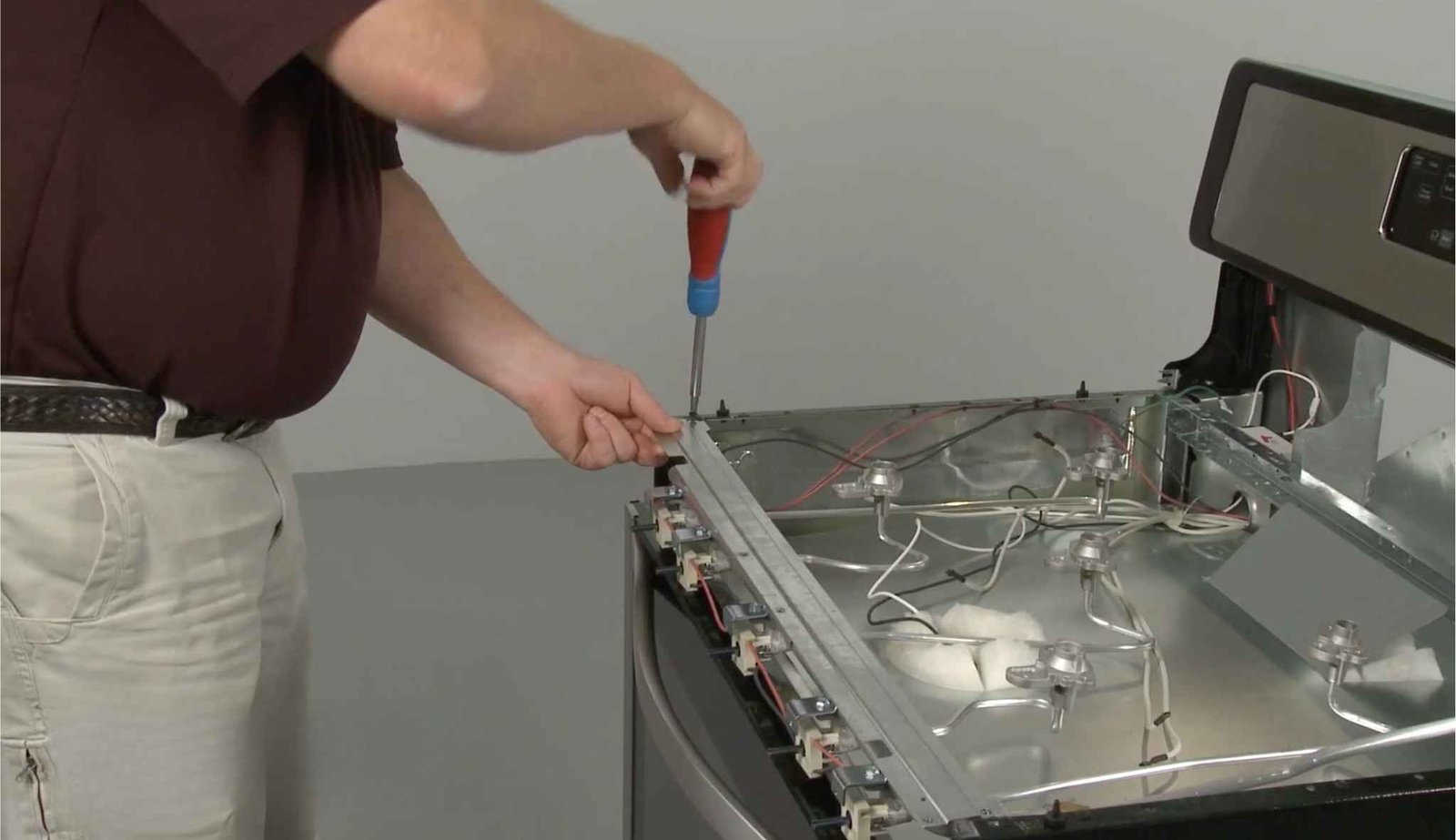
Gas stove ignition failure is the number one repair call we receive — 31% of all service requests. The stove clicks but no flame appears, or the burner lights intermittently. In Colorado Springs, the most common causes are a failed hot surface igniter that no longer draws enough current to open the gas valve (this is the cause in approximately 45% of ignition calls), a dirty or misaligned spark electrode that cannot generate a strong enough spark to ignite gas at altitude (25%), moisture or food debris in the burner ports blocking gas flow to the ignition point (15%), a faulty spark module that is not sending electrical current to the igniter (10%), and a gas supply issue such as a closed valve or low-pressure regulator (5%).
Altitude factor: At 6,000+ feet, igniters work harder because the thinner air makes initial gas ignition more difficult. A borderline igniter that would still function at sea level fails at altitude. This is why igniter lifespan in Colorado Springs is 20 to 30% shorter than the national average.
What you can check: Verify the gas supply is on. Clean visible debris from the burner ports with a toothpick (never a toothpick while the burner is hot). If the stove clicks rapidly with no ignition, the spark system is working but gas is not reaching the ignition point — this may be a blocked burner port or a gas valve issue requiring professional service.
When to call a technician: If you smell gas without ignition, turn off the stove, ventilate the room, and call for service. If igniters click but no burners light (all four), the issue is likely a spark module or gas supply problem requiring professional diagnosis.
Why Is My Gas Stove Flame Yellow Instead of Blue?
A properly calibrated gas burner produces a blue flame with a small, well-defined inner cone. Yellow or orange flames indicate incomplete combustion — too much gas relative to available oxygen. In Colorado Springs, yellow flames affect an estimated 40% of gas stoves that have never been altitude-calibrated. Causes include factory sea-level air shutter settings that do not admit enough air at altitude, oversized burner orifices that deliver too much gas for the available oxygen, clogged burner ports that disrupt the gas-air mixing pattern, and a failing gas regulator delivering inconsistent pressure.
Why it matters: Yellow flames are not just an aesthetic issue. Incomplete combustion produces carbon monoxide — an odorless, potentially lethal gas. Yellow flames also deposit black soot on cookware, cook food unevenly, and waste gas. If your gas stove has yellow flames, it is operating inefficiently and potentially unsafely.
The fix: Altitude calibration. A technician adjusts the air shutters on each burner to increase airflow and may install smaller-diameter orifices to reduce gas flow. This takes approximately 20 minutes for a four-burner range and is one of the most cost-effective improvements you can make to a gas stove in Colorado Springs.
Why Is My Oven Not Reaching the Set Temperature?
Oven temperature inaccuracy is the second most common stove problem we see (24% of calls). The oven heats but food is consistently undercooked, or an oven thermometer shows a significant difference between the set temperature and the actual temperature. Common causes include altitude miscalibration where the oven undershoots by 15 to 40 degrees because gas burns cooler at elevation, a weakening oven igniter that allows gas to flow but burns inefficiently, a failing temperature sensor (thermistor) that sends incorrect readings to the control board, a worn thermostat on older mechanical-control ovens, and a malfunctioning control board that does not regulate the gas valve or electric element cycling correctly.
Altitude factor: Even a perfectly functioning gas oven will undershoot its set temperature at 6,000+ feet if it has not been altitude-calibrated. The gas burns approximately 4% cooler for every 1,000 feet above sea level. At 6,500 feet, that is roughly a 26% reduction in combustion efficiency compared to sea level — enough to make a 350-degree setting produce only 310 to 325 degrees of actual heat.
What you can check: Place an oven thermometer in the center of the oven and compare the reading to the set temperature after 20 minutes of preheating. A variance of 25 degrees or more indicates a calibration or component issue.
Why Does My Electric Stove Burner Not Heat?
Electric burner failure accounts for 18% of our service calls. The burner does not heat at any setting, heats only on high, or heats unevenly. The most common causes are a burned-out heating element — coil elements develop visible breaks or hot spots, radiant elements under glass cooktops burn out at terminal connections, a failed infinite switch (burner control knob) that does not deliver power to the element at lower settings, a burned or corroded burner receptacle (the socket where coil elements plug in), a broken wire or loose connection in the wiring harness between the control and the element, and on glass cooktops, a failed element limiter that cuts power when the element overheats.
What you can check: For coil-type burners, try swapping the non-working element with a same-size element from another position. If the element works in the new position, the receptacle at the original position is the problem. If the element does not work in any position, the element itself has failed.
When to call a technician: Glass cooktop element replacement requires disassembling the cooktop surface — this is not a DIY repair. Any wiring issues, control failures, or problems affecting multiple burners should be professionally diagnosed.
Why Does My Glass Cooktop Have Cracks?
Glass cooktop cracking is a common concern, affecting roughly 8% of smooth-top electric range owners at some point. Cracks can appear suddenly or develop gradually. Causes include thermal shock from placing cold or wet cookware on a hot element, impact damage from dropping heavy objects on the surface, stressed glass from using oversized or warped cookware that does not sit flat, manufacturing defects in the glass that propagate under heat cycling, and using the cooktop surface as a cutting board or workspace.
Safety concern: A cracked glass cooktop surface is a safety hazard. Liquid can seep through cracks to the live electrical components beneath the glass, creating a shock or fire risk. If your glass cooktop is cracked, stop using the affected area immediately and schedule repair.
The fix: The glass surface cannot be patched. Repair involves replacing the full glass cooktop assembly, which typically includes the glass, frame, and all radiant elements as a single unit. Cost ranges from market rate (quoted before work begins) depending on the brand and model.
Altitude-Specific Stove Problems in Colorado Springs
Problems you will only encounter at 6,000+ feet — unique to our region.
Why Does My Stove Smell Like Gas When the Oven Starts?
A brief gas odor when the oven ignites is common in gas stoves — a small amount of gas flows before ignition occurs. However, at altitude, a weakening igniter delays ignition by 15 to 45 seconds instead of the normal 5 to 10 seconds, allowing significantly more unburned gas to accumulate in the oven cavity before the burner lights. This produces a noticeable gas smell and sometimes a small “whomp” sound as the accumulated gas ignites. If you smell gas for more than a few seconds during oven ignition, or if the smell persists after the burner lights, the oven igniter is likely failing and should be replaced promptly. This is both a performance issue and a safety concern — accumulated gas in the oven cavity ignites with a larger-than-normal flame that can damage components and, in extreme cases, pose a fire risk.
Why Does My Gas Stove Click Continuously?
Continuous clicking — where the igniter clicks repeatedly even after the burner is lit, or clicks when no burners are turned on — is a frequent complaint. Causes include moisture in the spark switch from a pot boiling over or kitchen humidity, food debris lodged in the spark electrode gap preventing the switch from sensing the flame, a short circuit in the spark module caused by moisture or wiring damage, and a faulty spark ignition switch on one burner sending false signals to the entire system. Most continuous clicking issues resolve by cleaning the affected burner area and allowing it to dry thoroughly. If clicking persists after cleaning and drying, a spark module or ignition switch replacement is needed.
Why Won’t My Oven Door Open After Self-Clean?
The oven door lock mechanism engages during the self-clean cycle (which reaches approximately 900 degrees Fahrenheit) and should release after the oven cools below 550 degrees. If the door remains locked, common causes include a seized door lock motor — the most frequent cause at altitude where extended self-clean cycles stress the motor mechanism, a failed door lock switch that does not sense when the oven has cooled, a control board glitch that holds the lock signal even after the cycle completes, or a blown thermal fuse that prevents the control board from receiving the “cool” signal. At altitude, the self-clean cycle runs longer because reduced oxygen slows the incineration process. This extended high-heat exposure significantly increases the failure rate of door lock mechanisms, gaskets, and control boards. We recommend manual oven cleaning over the self-clean function for stoves operating above 6,000 feet.
Why Does My Stove Trip the Circuit Breaker?
An electric stove or range that trips its circuit breaker has an electrical fault that needs immediate attention. Common causes include a shorted heating element where the element casing has cracked and the coil contacts the grounded metal frame, a loose or burned wire connection at the element terminal block, a failing control board drawing excessive current, an undersized circuit breaker or wiring in older homes, and water or moisture infiltrating the wiring cavity from a boil-over or cleaning. This is always a professional repair situation. A tripping breaker indicates a potential fire or shock hazard. Do not repeatedly reset the breaker — call for service.
What Causes an Induction Cooktop to Stop Detecting Pans?
Induction cooktops work by generating a magnetic field that heats ferromagnetic cookware. If the cooktop beeps or displays an error when a pan is placed on it, common causes include non-compatible cookware — the pan must be magnetic (test with a refrigerator magnet; if it sticks, the pan is induction-compatible), a warped or undersized pan that does not make full contact with the cooktop sensor zone, a failing induction coil that cannot generate a strong enough magnetic field, a faulty pan-detection sensor, and a cracked glass surface that has moved the coil slightly out of alignment with the cooking zone markings. Before calling for service, verify your cookware is induction-compatible and that the pan covers at least 70% of the marked cooking zone.
Why Is My Oven Cooking Unevenly?
Uneven cooking — where food burns on one side or top/bottom inconsistency exists — has several potential causes. The most common are a mispositioned oven rack that places food too close to the upper or lower element, a failing bake or broil element that heats only partially (visible hot spots or areas that do not glow), a malfunctioning convection fan that does not circulate air evenly, improper oven calibration where the temperature cycles are too wide, a damaged or missing oven baffle that directs heat flow, and oven door gasket damage that allows heat to escape unevenly. At altitude, uneven cooking is amplified because gas ovens already burn less efficiently. A partially failing element or poor air circulation that might be tolerable at sea level produces noticeably uneven results at 6,000+ feet.
Common Stove Problems by Brand
Samsung: Touch panel failure (SE error), door lock mechanism failure after self-clean, Wi-Fi connectivity errors that lock out manual controls.
GE/GE Profile: Igniter degradation at altitude (8-12 year lifespan vs. 12-15 at sea level), oven temperature sensor failure, self-clean thermal fuse blowout.
Whirlpool: Infinite switch failure on electric models, glass cooktop element burnout at terminal connections, gas valve corrosion on older models.
LG: Induction coil failure, control board sensitivity to power surges, door hinge spring breakage on slide-in models.
Frigidaire: Oven thermostat drift on older models, bake element terminal burnout, gas orifice clogging in humid kitchen environments.
KitchenAid: Convection fan motor bearing failure at 18-24 months of heavy use, dual-fuel models requiring separate altitude calibration for gas and electric functions.
Case Studies: Complex Stove Problems We’ve Solved
Case Study 1: Intermittent Gas Smell — Multiple Causes
Problem: A Colorado Springs homeowner reported a gas smell that appeared only when the oven was in use. Two previous repair companies had checked for gas leaks and found none, declaring the stove safe. The smell persisted.
Our diagnosis: We used a combustion analyzer to measure carbon monoxide and unburned hydrocarbon levels at the oven vent during operation. Readings showed elevated unburned gas — not a leak, but incomplete combustion. The cause was twofold: a borderline oven igniter allowing 30+ seconds of gas flow before ignition, combined with sea-level calibration that was delivering excess gas at 6,200 feet. Neither issue alone was severe enough to trigger an obvious failure, but together they produced detectable gas odor during every oven cycle.
Repair: Replaced the oven igniter and performed full altitude calibration including orifice replacement and air shutter adjustment. total cost: market rate.
Result: Zero gas odor during oven operation. Combustion analyzer confirmed clean burning with no detectable unburned hydrocarbons. The homeowner had endured the smell for 18 months because two companies had missed the root cause.
Case Study 2: Electric Range Tripping Breaker — Hidden Wiring Fault
Problem: An electric range in a 1990s Cimarron Hills home tripped the 40-amp breaker within 5 minutes of turning on the oven. Surface burners worked without tripping the breaker. The homeowner had already replaced the bake element themselves with no improvement.
Our diagnosis: The new bake element was functional. The fault was in the terminal block where the main power wires connect to the range — a burned and corroded terminal was allowing intermittent arcing that drew surge current when the oven element activated (adding its amperage to whatever surface burners were running). The corrosion was caused by a previous boil-over that had dripped through the cooktop surface to the terminal block below.
Repair: Replaced the terminal block, cleaned and re-terminated all power connections, and inspected the full wiring harness for additional damage. total cost: market rate.
Result: No more breaker trips. The range operates all elements simultaneously without issues. A hidden market rate wiring problem that was masquerading as a a higher market rate element or breaker issue.
Case Study 3: Brand-New Stove Not Working at Altitude
Problem: A homeowner purchased a new GE gas range from a big-box retailer and had it delivered and installed. From day one, the oven undercooked everything, burner flames were tall and yellow, and a slight gas smell was present during oven use. The homeowner thought the range was defective and was preparing to return it.
Our diagnosis: The range was not defective. It was a perfectly functional gas stove — calibrated for sea level, operating at 6,500 feet. The big-box retailer’s delivery team installed it without performing any altitude conversion. This is common: most retail appliance installations in Colorado Springs do not include altitude calibration because the delivery teams are not equipped or trained for it.
Repair: Full altitude conversion: installed high-altitude orifices on all burners and oven, adjusted air shutters, recalibrated oven thermostat. Total time: 45 minutes. total cost: market rate.
Result: The range performs exactly as designed. Blue flames, accurate oven temperature, no gas smell. The homeowner kept the range instead of returning it and enduring the hassle of exchange and re-delivery.
When Should You Repair vs. Replace Your Stove?
As a general guideline, repair makes economic sense when the repair cost is less than 50% of a comparable new appliance, the stove is less than 15 years old (gas) or 13 years old (electric), only one major system is failing (not multiple simultaneous failures), and replacement parts are readily available for the model. We recommend considering replacement when multiple major components are failing simultaneously, the repair cost exceeds 50% of a new equivalent appliance, the stove is a gas model over 15 years old with known safety recall issues, or energy costs from an inefficient older unit exceed the savings from repair. For a detailed analysis, see our Stove Repair vs. Replace Guide.
Need a professional diagnosis? (719) 467-3100 — Free diagnostic with approved repair.
More Stove Repair Resources
Stove Repair vs Replace Guide »